The smoke clears
The basics you need to know about wildfires and what Capitol Hill is doing to stop them.

Happy Thursday! This is a bonus edition of Out of State, diving deep into wildfires: why they matter, why they’re getting worse, and what Capitol Hill plans to do about them. In the future, deep policy dives like this will usually be behind a subscription paywall — if you want to make sure you get this content, make sure you’re signed up for a paid subscription. You won’t be charged until the paywall lands!
Now, let’s talk about fire…
In 2019, the world watched as Notre Dame burned. (bear with me)
If you were able to watch Parisians solemnly singing Ave Maria without shedding a tear of your own, you have incredible composure. I cried — for what Paris lost that day, but also because I know the horror of watching fire take away something you care about deeply.
In the Pacific Northwest, forests are our cathedrals. And until recently, the temperate forests that I grew up in, west of the Cascade Mountains, didn’t burn often. So when the Eagle Creek fire broke out on the Oregon side of the Columbia River Gorge in 2017, it shocked us all.
Eagle Creek was paradise. And suddenly, it was gone.


I watched online as the fire burned so high that embers jumped the Columbia River to set Washington state alight — a mile-long leap, extraordinary when you realize that a standard firebreak is 12-30 feet wide.
Evacuation planning, losing fire insurance, worrying about friends or family fighting fires, and even just realizing that the campground where you learned to ride your bike is now gone — all these stressful emotions underlie the wildfire policy debate that the rest of this newsletter dives deep into.
Because while there is broad support on Capitol Hill for stopping fires, Congress has yet to agree on how America can do so quickly.
DISPATCH
The more I learn about megafires, the more overwhelmed I feel about stopping them.
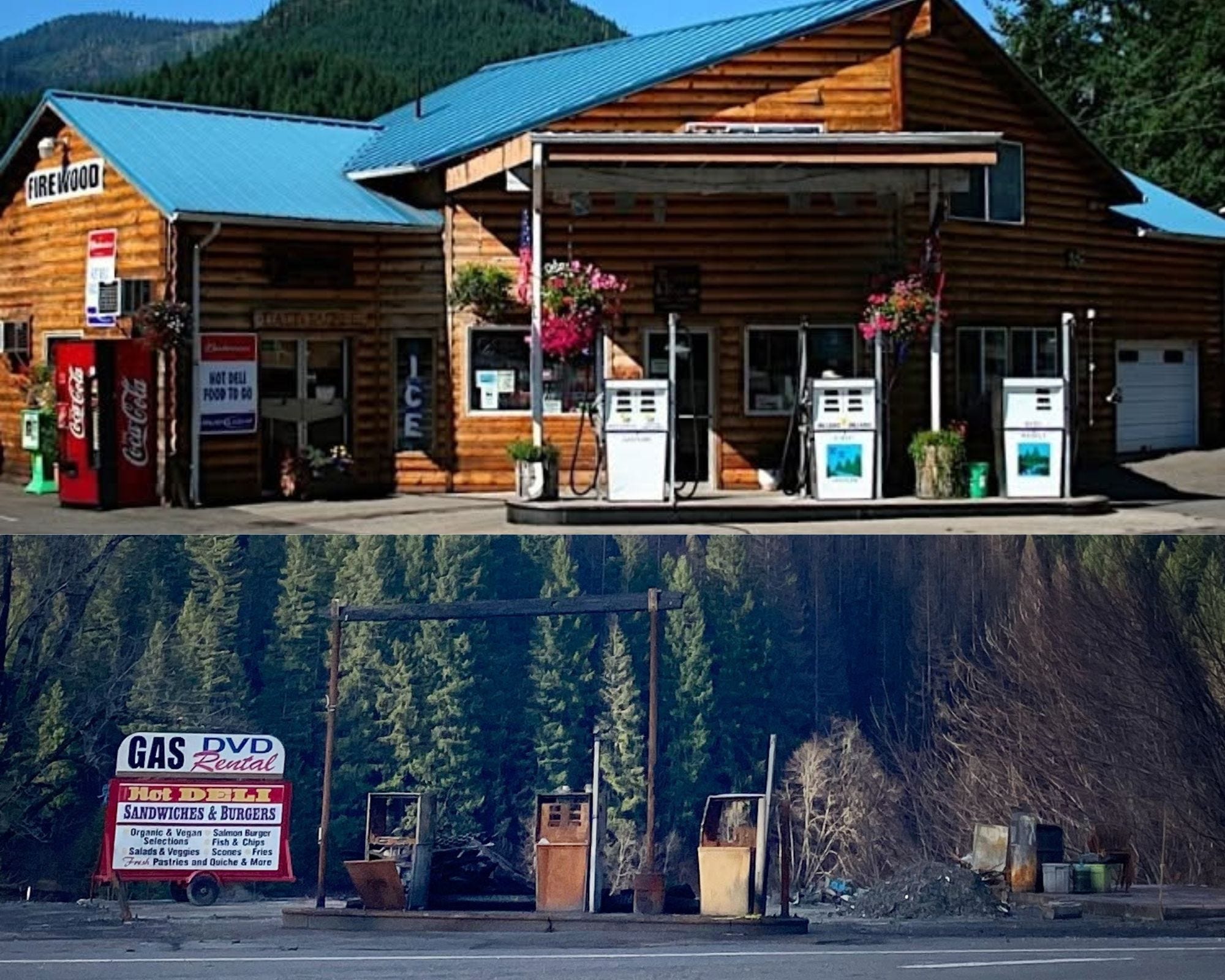
Here is my attempt at summarizing a very complicated ecological issue: Forests are burning because the climate is hotter and drier, and because logging and other human impacts have created more fire-prone forests. Throughout the 20th century, America cut down a lot of trees in very large sections (called clear-cutting), replanted them densely as a crop intended to be cut again in 20 years, and put out any small or medium fires that broke out in the meantime.
But in a healthy forest, fires are natural. They leave the canopy largely untouched and eat up the undergrowth, which can become incredibly flammable in a dry summer. When Americans arrived in the West in the late 19th century, we started putting out fires that threatened the trees or our homes. And after the decline of the logging industry about 20 years ago, we went largely hands-off.
Now, the West has a lot of unhealthy forests that were logged, replanted densely, and then left alone unless a fire broke out. When it gets hot and dry, they’re the perfect tinder for megafires.
What’s Congress doing? Most wildfire-related bills are focused on forest management and wildfire fighting. There are a handful of proposed bills, but most lawmakers in this Congress have coalesced around the bipartisan Fix Our Forests Act.
FOFA passed the House shortly after the 2025 Los Angeles wildfires, and the Senate version was introduced by Republican Sens. Tim Sheehy (Mont.) and John Curtis (Utah) and Democratic Sens. Alex Padilla (Calif.) and John Hickenlooper (Colo.).
It’s a big bill. Nearly 200 pages that cover everything from reforestation and new wildfire response technology to pine beetle infestations.
The politics: The Fix Our Forests Act has “a weird coalition of bipartisan opposition,” Sheehy told me last week. The bill, he explained, loses support on the far left and the far right for entirely different reasons.
The Democratic caucus is deeply split, even among Westerners. Hickenlooper and Padilla are lead sponsors of the bill, for example, but their counterparts from Colorado and California — Democratic Sens. Michael Bennet and Adam Schiff — both voted against it in committee last October. The environmental community is also split: The Nature Conservancy and Environmental Defense Fund back the legislation, while groups like The Sierra Club oppose it.
It’s not like the entire bill is repugnant to Democrats; even those in opposition support many of its provisions. A section on prescribed burns (here’s an explainer on those), for example, was proposed by Sen. Ron Wyden of Oregon — but Wyden still opposes FOFA.
Democrats opposing FOFA are mostly concerned with language that reduces judicial and community oversight over logging in certain areas, saying it could pave the way for more logging beyond what is healthy. They also argue that without funding, the provisions in the bill that could help forests won’t be implemented. In order to meet Republican requirements for legislation in this Congress, FOFA doesn’t allocate money — despite authorizing expensive projects and new technology.
“The Fix Our Forests Act provides no resources to implement any wildfire risk reduction projects nor does it restore land management agency staff,” Bennet said in a statement after he voted against the bill in the Senate Committee on Agriculture, Nutrition and Forestry last year.
Supporters argue that they’ll find the money in the annual appropriations process. But the spectre of a future funding fight isn’t enough to assuage opponents.
Fires currently raging from Oregon to Colorado pile on the pressure, through to opposite ends: Some Democrats want desperately to pass an imperfect bill rather than nothing at all. And others don’t want to waste the political will to deal with federal wildfire policy on something that they believe lacks the funding to actually make a significant difference.
Susan Jane Brown, a well-known environmental lawyer based in Oregon who is keeping a close eye on the legislation, explained the problem to me: “You’ve got members who are willing to sacrifice public comment [on logging] in order to get the bill passed, with the hope that implementing the bill — even though there’s no money to do so — will reduce wildfire risk in the future,” Brown explained. “For members who oppose, that risk calculus is not good enough. It’s too speculative.”
What’s next for the legislation? Sheehy and Hickenlooper both told me they’re hoping to get a vote on the bill soon. The recent wildfire smoke, Hickenlooper explained, gave supporters an excuse to talk about the bill. “It came up in conversation morning, noon, or night,” he said. “It increased the sense of urgency.”
FOFA has the votes to pass, Sheehy claims, but because there is opposition, the best chance is to attach the wildfire legislation to a must-pass bill such as the National Defense Authorization Act — which is stalled right now in the Senate.
This was my tip-of-the-iceberg, non-exhaustive Wildfire Policy 101. What questions do you have about wildfires — how they work, what policy ideas are out there, etc? Email me at nataliefertig@gmail.com, and I’ll find you answers for a future newsletter.
FIELD NOTES
In Tuesday’s newsletter, I shared some of the things I pack when I’m heading to report in the rural West. Then I asked the internet (aka Twitter/X) to share tips about what you all take on work trips into rural America. Here are a few regional-specific ideas that surfaced:
-For starters, everyone recommends boots or thick-soled shoes. That logic is universal.
-“Always have a pair of boots/thick soled shoes ready. Always have a rain jacket and a black dress or funeral or church outfit ready,” responded Ruth Severn Smith, who covers politics and elections in Alabama for AL.com, adding that it was a tip most relevant to rural communities in the South or Midwest.
-Lily Catherine Guiney, a reporter for Gongwer Michigan (part of the State Affairs network), added the tip that while business casual may not be appropriate when field reporting in rural areas, that doesn’t mean reporters from D.C. and NYC heading to the Midwest should leave the blazer and flats home altogether. They’re still appropriate when covering statehouses and state lawmakers.
“It always struck me as interesting how national news folks tend to dress down to cover events in rural areas compared to DC/NYC, when those of us here on the day-to-day rotate suits/dresses/button downs to generally be business casual,” she added on X.
READING LIST
For understanding the wildfire issue better…
A Desperate Bid for Survival as Fire Closed In on an Oregon Mountain Town - This New York Times account of the dozen people trapped in Detroit, Ore. as the Santiam Fire closed in (and how they luckily were saved at the last moment) is a harrowing and extraordinary account of what it’s like to survive a megafire. The Santiam Fire killed five people, and came very close to claiming many more. It’s a must-read. [NY Times]
Listen: Timber Wars - in my honest opinion, this is the ultimate primer on understanding forests in the West — both how and why we once managed them for timber products, and why we stopped. I grew up in the Pacific Northwest while this battle was happening, and this podcast taught me so many things I never knew. [OPB]
Los Angeles burned. Which city is next? - More than a third of the U.S. population lives in areas that could be home to the next fire catastrophe, Gabrielle Canon writes in The Guardian.