


In today’s newsletter:
Campaign promises and aggressive ads about data centers have not convinced the residents of rural Clinton Township in Wayne County, Pennsylvania that either candidate in a close toss-up race is truly on their side.
When Clinton Township residents blocked the construction of a $6 billion hyperscale data center, they did it with little help from local officials. Now they are skeptical of politicians jumping into this issue at what feels like the eleventh hour for many local organizers.
Conversations with Clinton Township organizers reveal two actions that sway their opinion: pushing aggressive moratorium policies and physically being present to listen to the locals who are waging this fight.
I went to rural Pennsylvania last week to answer a question: As fervor grows around data centers and politicians in both parties take stances that restrict their development, how do voters deeply invested in the issue choose which candidate or political party to trust?
I spoke with eight organizers who successfully fought a hyperscale data center in rural northeastern Pennsylvania, about 30 minutes northeast of Scranton. Regardless of party affiliation and despite defiant campaign ads and restrictive proposals presented by politicians up and down the ballot, the overwhelming sentiment toward elected officials and candidates was one of frustration and apathy.
I chose Clinton Township in Wayne County because it lies in Pennsylvania’s 8th CD. An important race is underway in this R+4 seat between incumbent GOP Rep. Rob Bresnahan and Scranton Mayor Paige Cognetti. Bresnahan and Cognetti both want more restrictions put on data centers and increased local control, as does Democratic Gov. Josh Shapiro. State Treasurer Stacy Garrity, a Republican running against Shapiro, went a step further and called for a pause on development.
Before we dive in, always, if you have any thoughts, tips or questions, email me: nataliefertig@gmail.com. Especially if you want to talk about data centers.
DISPATCH
“Nobody’s coming to save us” was one of the first things Lori Remus, a blonde bespectacled woman selling yellow “Save Browndale Mountain” T-shirts out of the back of her minivan, told me when I asked organizers in her small Pennsylvania town about the response they’d received from elected officials.
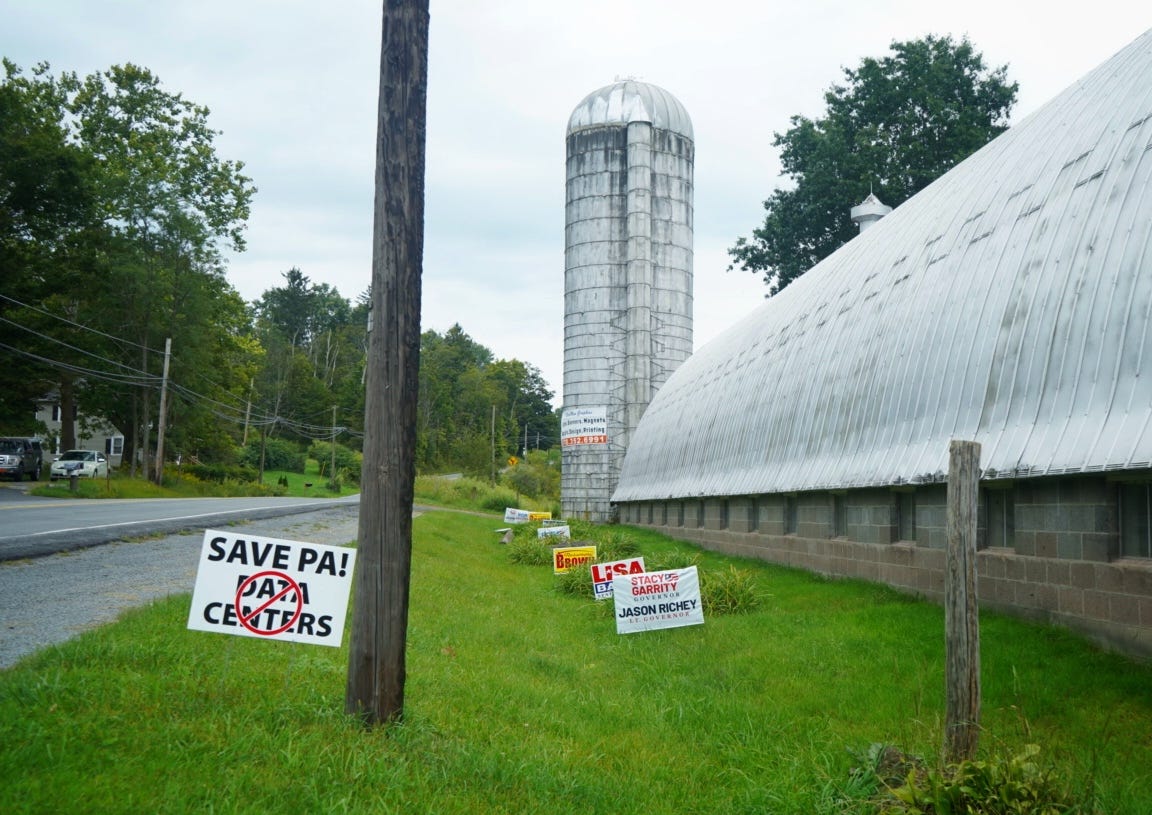
Browndale Mountain is the site of a $6 billion hyperscale data center proposed by Linde Corporation in Clinton Township, a community of just over 2,000 people. It’s within PA-08, a Congressional district now littered with dozens of proposed data centers. The blowback from residents against data center development has made the issue a central part of a key toss-up race that could decide control of the House.
“They thought they were rolling into a bunch of hillbillies,” added Natalie Kulick, a university librarian and one of the organizers against the Clinton Township data center. “We are not. We’re a community of lawyers, doctors, and also dentists and physicists.”
Kulick and her neighbors say they’re deeply frustrated with a corporation that ignored the residents of the community, assuming the locals would be easy to sway. That anger builds on decades of feeling shafted by state and federal decisions that often hurt their community’s economy, environment, health, or all three.
“It’s this big reveal about social class,” said Chelsea Waisanen, a nurse and a community member involved in the effort to deny the data center’s permit. “No one stopped to think, ‘What do the people get from this?’ Lo and behold, we get nothing.”
Both parties have invested time and money into PA-08: Nearly $2 million combined had been spent, as of Sept. 16. And both candidates are investing in data center ads. Scranton Mayor Paige Cognetti’s plan, which she described in a July ad, would end tax breaks, require tech companies to hire local workers, and make sure new data centers don’t pollute local waterways or raise utility bills. She also attacked Rep. Bresnahan for owning stock in companies with ties to the data center industry.
Bresnahan, meanwhile, also wants to end “taxpayer incentives” for data centers, and is promoting legislation he introduced in Washington, D.C. to increase the ability of local governments to decide whether data centers can be built. In a recent ad, he cites a successful fight against data centers in nearby Archbald as inspiration for his legislation.
But all these proposals, including a recent executive order from Gov. Shapiro that restricts permitting and empowers local control over data center development, were deemed insufficient by local organizers — who span the entire range of political affiliation, from conservative to socialist.
“I just switched to the independent party,” said Phil Waisanen, a former Republican who became Clinton Township’s expert on sound ordinances and data center development and says he plans to vote in the local election for fellow data center organizer Kyle Devlin, a Democrat. “Nobody’s speaking for you, you know? I don’t want to be affiliated on paper with anybody at this point.”
Pennsylvania’s lawmakers “underestimated how big a deal this would become,” explained Sarah Martik, executive director of the Center for Coalfield Justice, a Northeast Pennsylvania-based organization formed in the 1990s to advocate around the environmental and health impacts of coal mining and other industrial development. Today, Coalfield Justice supports similar grassroots organizing efforts in coal country around other development projects that could negatively impact local residents.
The fight against data centers, though, is unlike anything Martik has seen before.
Countless proposals for fracking, petrochemicals and natural gas have promised to bring back jobs to NEPA (Northeast Pennsylvania) since the coal industry’s decline, usually to replace other former industrial sites. Residents usually weigh the possible health and environmental impacts against the benefit of well-paying jobs, and often choose jobs, Martik said. But when they oppose a proposed development, she adds, their wishes are rarely heard or followed.
“Projects almost never get a no, despite overwhelming opposition,” she explained. But in recent months, Archbald and Clinton Township both rejected data center permits, flipping that trend on its head.
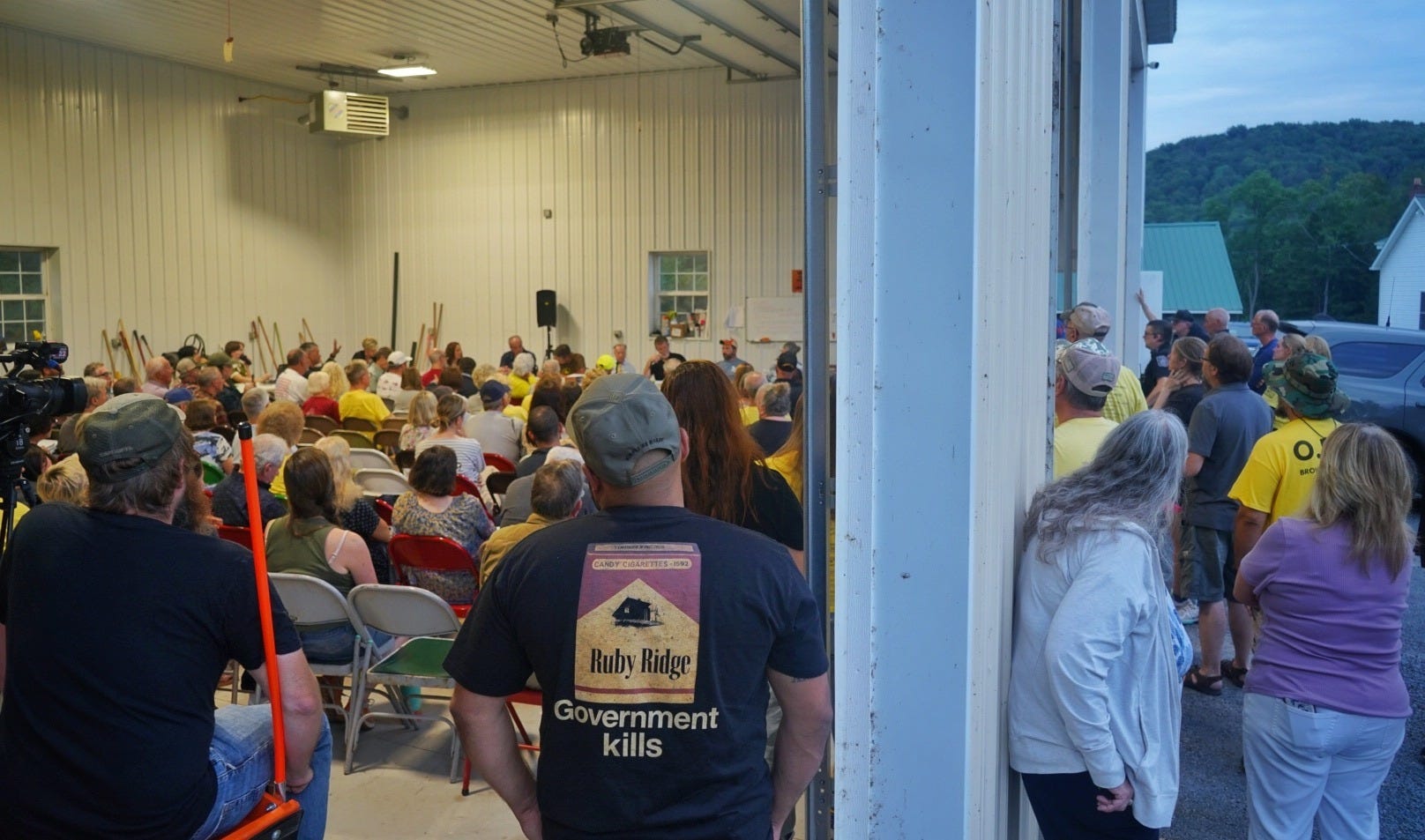
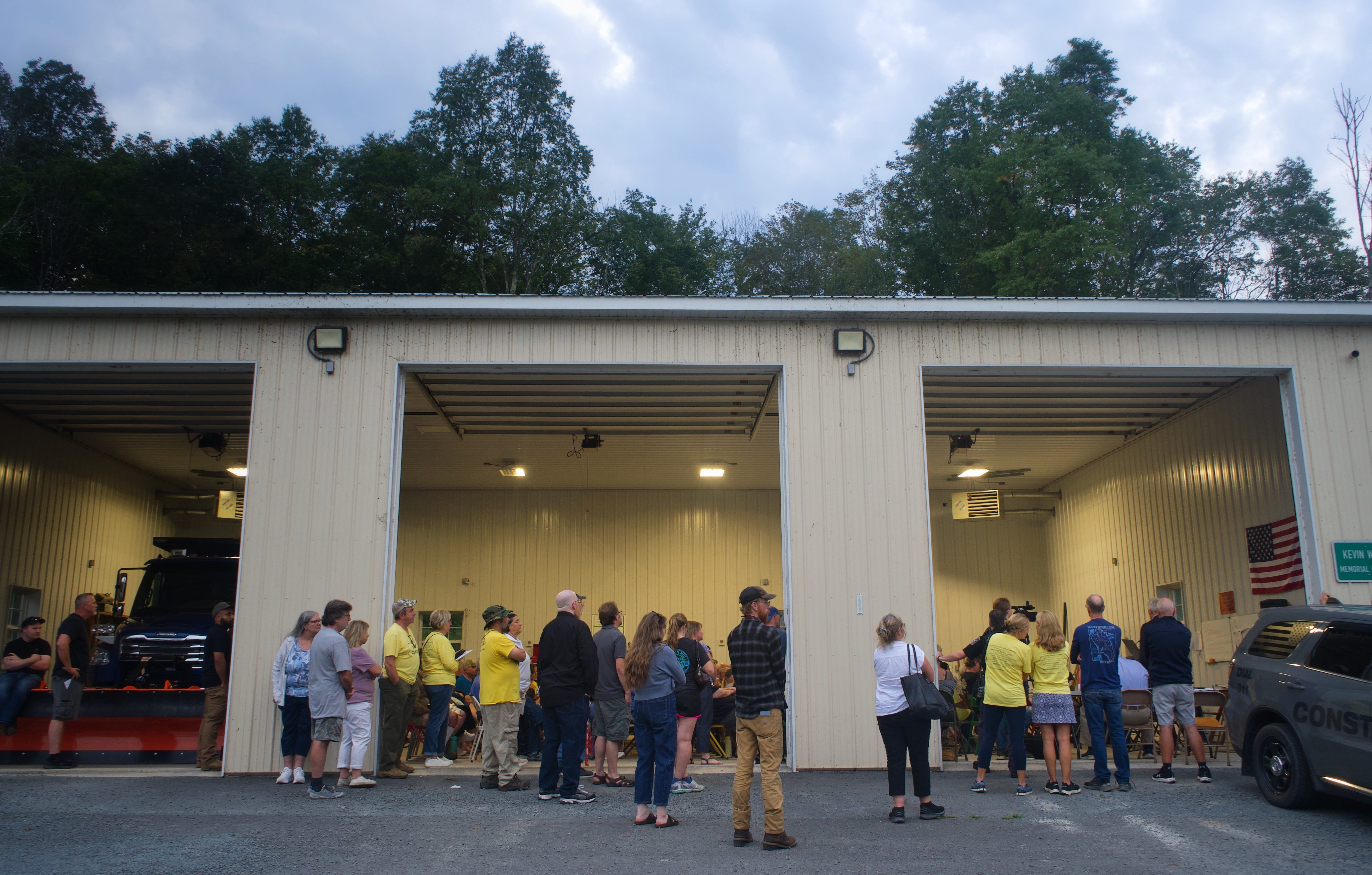
Towns with proposed data centers are proactive, organizing themselves before Coalfield Justice can even roll up. Locals in Clinton Township organized themselves on social media platform Nextdoor, raised more than $60,000 in less than four months, and about 100 people — or nearly 5 percent of the population — turned up on multiple occasions for weeknight data center meetings. Everyday residents became grassroots activists overnight, attended meetings in nearby towns to learn the best practices for fighting the data centers and now are passing the skills on to towns beginning the same fight.
Martik says the national prominence of this issue and stories of other towns winning their fight inspire new communities to keep tabs on proposals in their area, and give them the confidence to win against a wealthy corporation.
This groundswell has politicians on their back feet. In Pennsylvania, officials like Bresnahan, Garrity and Shapiro were supportive of data centers only a year ago — and now are scrambling to match the tone set by voters.
“I don’t think that politicians have ever experienced people saying no to development like this, and they don’t know how to handle that,” Martik explains.
The power of showing up
Conversations with locals fighting these data centers often turn quickly from concerns over health, rivers and AI to an overall frustration with how little effort their elected officials have made to understand the issue or respond to calls for help. Because the towns fighting data centers are all in contact, organizers often know if a politician visits another community, and locals take note.
Lawmakers are considered “good” on data center policy if they were early adopters of an anti-data center moratorium. But in a region sensitive to being constantly underestimated or forgotten, showing up also holds a lot of weight. The poor response of local officials even inspired one data center organizer — Kyle Devlin — to run for the state legislature.
“When it comes to data centers, there’s such a low expectation of elected officials,” Martik explained. “Showing up is the bare minimum that you can do, and that is how low the bar is set,” she added.
Rural, Northeast Pennsylvania has often been left behind by lawmakers when development or industry ended up hurting residents. Martik recalls a town in nearby Greene County that lost access to clean water in 2022 because fracking drill fluids and gas contaminated a nearby well. No elected official showed up to speak to town residents about the crisis until late 2024, Martik recalled.
“The fact that people go through really bad things in their lives — like they don’t have access to clean water — and [lawmakers] don’t show up for that, I think that creates such a trust problem,” Martik explained. Locals trust politicians more if they show up, she said, because it creates reliable access to people with power to change their situation: “I know I’ll be able to say something [at the meeting] because she comes to see us,” residents might stay about a lawmaker who regularly attends.
Bresnahan and Cognetti were credited for attending data center meetings in the region — though organizers were disappointed by the number of meetings they attended and how much they interacted with locals.
Cognetti is also leaning into messaging that taps the region’s long-standing frustration with developers who come and go.
“Big companies have come before, take what they want, and leave us with their mess to clean up,” Cognetti said in an ad run last month. “Now it’s data centers.”
Ultimately, the organizers in Clinton Township who spoke with Out of State feel they were abandoned by their elected officials to deal with a huge problem on their own. When I asked what politicians could do to win over residents, two solutions emerged: propose a 36-month moratorium, and show up more.
“Those politicians could just step up and turn this thing around,” Chelsea Waisanen said. “Josh Shapiro, Rob Bresnahan, come on over. Stacy Garrity, come on over. My name’s Chelsea. There’s a lot of us here in Clinton Township who would love to talk with you.”
FIELD NOTES
Blue Dogs endorsed four additional candidates: Jake Johnson in MN-01 (rated “likely R”), Mitchell Berman in WI-01 (rated “likely R”), Bill Hill in AK-AL (rated “likely R”), and Chaz Molder in TN-05 (rated “solid R”).
Sabato’s Crystal Ball shifted the rating on a few key rural congressional districts: IA-02 and MI-04 both moved from “leans Republican” to “toss-up.” CO-05 also moved from “likely” to “lean” Republican. Even NV-02, a strongly Republican district covering most of Nevada’s vast rural expanse, shifted from “safe Republican” to “likely Republican.”
The Congressional Black Caucus launched a GOTV effort targeting Black, rural voters this week. “There are those of us who have always complained about the fact that neither party spends the significant and requisite time with Black and brown and poor and rural communities,” said former HUD Secretary Marcia Fudge, a leader in the new effort. “We finally decided to take it upon ourselves to do something that we didn’t think anybody else in the industry was doing.”
DCCC launched an ad targeting the Trump administration’s decision to import foreign beef, running in many heavily rural districts including CA-22 (Valadao vs. Villegas), IA-02 (Mitchell vs. James), MT-01 (Forstag vs. Flint), MN-01 (Finstad vs. Johnson) and NM-02 (Vasquez vs. Cunningham). The ad will run on Meta.
Meanwhile, President Trump’s super PAC, MAGA Inc., outlined the 35 races it is laser-focused on in November. Many of the rural districts we’ve discussed here are on that list, including CO-08, IA-01, NC-11, NM-02, MI-04, TX-35, and WA-03. And Trump-backed super PAC Never Going Back spent a lot of money this month on even more races.
ON THE HILL
Wildfire legislation: A bipartisan coalition of western lawmakers introduced the Wildland Firefighter Health and Safety Act on Thursday.
If passed, the legislation would create and fund a Health and Wellbeing Program, develop OSHA standards for wildland firefighters and more. [full press release]
The legislation was intro’d by Democratic Reps. Maxine Dexter (Ore.) and Jared Huffman (Calif.), Democratic Sens. Jeff Merkley (Ore.) and Alex Padilla (Calif.), Republican Rep. James Gallagher (Calif.) and Republican Sens. Tim Sheehy (Mont.) and Jim Curtis (Utah).
READING LIST
-Colorado Democrats are trying to win back rural voters, even creating a grant program called Colorado Comeback to help county party offices support local candidates. [Colorado Public Radio]
-Former Ohio Sen. Sherrod Brown, long a Democratic champion of the working class, is trying to return to Congress in 2026. His success could determine whether Democrats take control of the Senate. Some of the union workers who backed GOP Sen. Bernie Moreno in 2024 are shifting back to Brown this year, signaling the Senate seat may be ready to flip back to blue. [Washington Post]
-GOP Rep. Byron Donalds is running for Florida Gov., but he lost 17 rural counties in the primary. Some strategists in the state are blaming racism in rural America for the outcome, while others note that factors like Collins’ veteran status may have played a larger role. [USA Today via Yahoo]
Greene County is in far southwestern PA, nowhere near Wayne County.
The local perspective here seems especially important.
It's easy for the national debate to become “AI development versus stopping AI development,” while communities are asking much more specific questions about electricity, water, infrastructure, local control and what residents actually receive in return.
The fact that some of these concerns cross ideological lines also makes this a particularly interesting political issue.